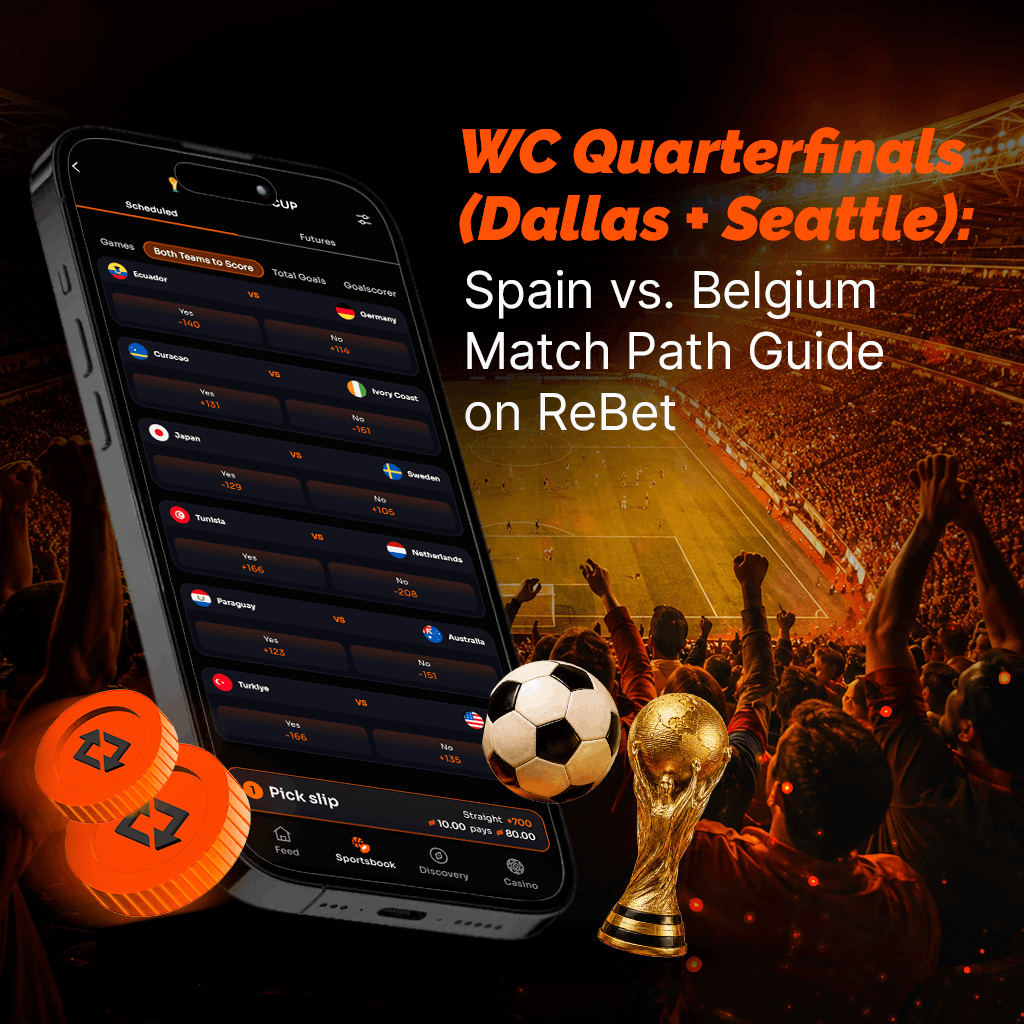
A knockout match rewards a close look at how teams create and protect space. Give your group a simple tactical question that stays useful as the score changes.
Notice whether a team changes its shape, presses higher or uses a different route forward. Describe what you see before deciding why it happened. Related guide
Check official competition information for venues and schedules. This saved article is a viewing guide and does not supply a live fixture service.
Contents
- 1 Key Factors
- 2 Why Does Spain vs. Belgium Matter for BoomBet Users?
- 3 How Can Fans Follow Spain vs. Belgium on BoomBet?
- 4 What FIFA Details Should Fans Know?
- When an explanation uses an example, consider which parts belong to the general idea and which depend on the particular situation being described. Related guide
- 6 All Confirmed FIFA World Cup 2026 Quarter-Final Matchups
- 7 Why Is the Quarter-Final Path Important Before Match 98?
- 8 Mobile Access for World Cup Knockout Days
- 9 How Does BoomBet Support World Cup Fans Beyond One Match?
- 10 Why Does BoomBet Fit the World Cup Knockout Stage?
- 11 FAQs
- A strong performance deserves attention on its own terms, without being stretched into a promise about every future appearance or every similar-looking matchup. Related guide
- The aim of this article is to make the subject easier to discuss, with clear distinctions between an illustration, an explanation and a live function. Related guide
- 11.3 Are All Quarter-Final Matchups Confirmed?
- Look at how an observation was reached before deciding whether you agree with it; a clear explanation gives the conversation something concrete to work with. Related guide
- Some readers follow every round and others join for a particular occasion; plain explanations make space for both without turning knowledge into an entry requirement. Related guide
- Some readers follow every round and others join for a particular occasion; plain explanations make space for both without turning knowledge into an entry requirement. Related guide
- 12 Conclusion
Watch the response
- When an explanation uses an example, consider which parts belong to the general idea and which depend on the particular situation being described.
- Taking a moment to identify the subject and the purpose of a page makes it easier to distinguish a general explanation from a live service or account action.
- Taking a moment to identify the subject and the purpose of a page makes it easier to distinguish a general explanation from a live service or account action.
- Treat a visual example as a way to recognise an idea, while using the accompanying description to understand what the example does and does not show.
- The time before an event is a chance to gather context, while the time afterwards is a chance to revisit an opinion without pretending the result was inevitable.
- A postponed or interrupted event needs its own context, and the conditions of a particular service should never be inferred from the sport's name alone.
Keep event details separate
The same final score can come from very different contests, so a worthwhile recap looks beyond the number to the choices that shaped it.
A useful match discussion begins with the question being asked: a full-event result, a particular phase of play and an individual performance describe different things. When an explanation uses an example, consider which parts belong to the general idea and which depend on the particular situation being described. Related guide
Starting arrangements can change the shape of a contest, so a preview works best when it identifies the assumptions on which its argument depends.
Follow the details that matter
- Statistics are easier to interpret when their scope is clear: a single contest, a recent stretch and a full competition each provide a different perspective.
- The same final score can come from very different contests, so a worthwhile recap looks beyond the number to the choices that shaped it.
- Taking a moment to identify the subject and the purpose of a page makes it easier to distinguish a general explanation from a live service or account action.
- The same final score can come from very different contests, so a worthwhile recap looks beyond the number to the choices that shaped it.
- Some readers follow every round and others join for a particular occasion; plain explanations make space for both without turning knowledge into an entry requirement.
The details behind the format
Good previews give readers a few useful things to notice, while good recaps explain which of those details actually mattered once play unfolded.
A helpful guide makes unfamiliar language easier to understand without assuming that every reader has used the same product or followed the same events.
Sharing the detail that caught your eye can invite a better response than presenting a confident conclusion with no explanation of how you reached it.
Build a clearer picture
- Review available picks
- Track Spain vs. Belgium
- Return before Match 98
- Check official rules
- Follow FIFA-listed match details
A practical point to remember
A helpful guide makes unfamiliar language easier to understand without assuming that every reader has used the same product or followed the same events.
An early lead may change the decisions that follow, making the next stage of the contest a different problem from the one described before the start.
A short run of strong results can be interesting without being enough to describe an entire season, especially when opponents and circumstances change.
Start with the central idea
- Match 93 is Portugal vs. Spain
- When two people disagree about an event, checking the period, participants and outcome they mean often resolves the confusion before the debate gets heated.
- Match 94 is USA vs. Belgium
- A useful match discussion begins with the question being asked: a full-event result, a particular phase of play and an individual performance describe different things.
- Match 98 is Spain vs. Belgium
- Separate an observation about what has already happened from a prediction about what might happen next, and leave room for the event to surprise you.
Keeping the event in context
When two people disagree about an event, checking the period, participants and outcome they mean often resolves the confusion before the debate gets heated.
| Features | FIFA Detail | Why It Matters for Fans |
|---|---|---|
| Match 93 | Portugal vs. Spain at Dallas Stadium | A comparison works best when the same question is asked of each option and the criteria are clear enough for another reader to understand. |
| Match 94 | USA vs. Belgium at Seattle Stadium | Some readers follow every round and others join for a particular occasion; plain explanations make space for both without turning knowledge into an entry requirement. |
| Match 98 | When two people disagree about an event, checking the period, participants and outcome they mean often resolves the confusion before the debate gets heated. | Some readers follow every round and others join for a particular occasion; plain explanations make space for both without turning knowledge into an entry requirement. |
A highlight shows one memorable passage of play; the wider sequence explains how that opportunity developed and what each side could have done differently.
What to take into the next conversation
The time before an event is a chance to gather context, while the time afterwards is a chance to revisit an opinion without pretending the result was inevitable. A comparison works best when the same question is asked of each option and the criteria are clear enough for another reader to understand.
| Features | Confirmed Matchup | Venue |
|---|---|---|
| Match 97 | France vs. Morocco | Boston Stadium |
| Match 98 | Spain vs. Belgium | Los Angeles Stadium |
| Match 99 | Norway vs. England | Miami Stadium |
| Match 100 | Argentina vs. Switzerland | Kansas City Stadium |
The aim of this article is to make the subject easier to discuss, with clear distinctions between an illustration, an explanation and a live function. Good previews give readers a few useful things to notice, while good recaps explain which of those details actually mattered once play unfolded.
What to take into the next conversation
- Starting arrangements can change the shape of a contest, so a preview works best when it identifies the assumptions on which its argument depends.
- Start with the part of the topic that interests you most, then use the surrounding information to understand how that detail fits into the wider experience.
- Starting arrangements can change the shape of a contest, so a preview works best when it identifies the assumptions on which its argument depends.
- Taking a moment to identify the subject and the purpose of a page makes it easier to distinguish a general explanation from a live service or account action.
- Sharing the detail that caught your eye can invite a better response than presenting a confident conclusion with no explanation of how you reached it.
What to take into the next conversation
Separate an observation about what has already happened from a prediction about what might happen next, and leave room for the event to surprise you. A comparison works best when the same question is asked of each option and the criteria are clear enough for another reader to understand.
Look at how an observation was reached before deciding whether you agree with it; a clear explanation gives the conversation something concrete to work with.
When an explanation uses an example, consider which parts belong to the general idea and which depend on the particular situation being described.
Keeping the event in context
- Review the confirmed teams
- Follow Spain vs. Belgium
- Check the Los Angeles Stadium listing
- Review available BoomBet picks
- Check official rules
Following the experience on your device
When two people disagree about an event, checking the period, participants and outcome they mean often resolves the confusion before the debate gets heated.
A familiar design can make a page approachable, but its actual purpose still comes from the features and information available within it.
A comparison works best when the same question is asked of each option and the criteria are clear enough for another reader to understand. Separate an observation about what has already happened from a prediction about what might happen next, and leave room for the event to surprise you. Related guide
Following the experience on your device
- Before Spain vs. Belgium
- During World Cup schedule checks
- When reviewing available picks
- Before returning to Match 98
- When checking official rules
The details behind the format
The same final score can come from very different contests, so a worthwhile recap looks beyond the number to the choices that shaped it.
The time before an event is a chance to gather context, while the time afterwards is a chance to revisit an opinion without pretending the result was inevitable.
An enjoyable pace is one that leaves room to stop, read and decide what to explore next without feeling obliged to remain active.
Keeping the event in context
- Social sports picks
- Official rules access
- Virtual currency details
- Mobile access during match days
- Confirmed matchup awareness
What makes this part worth a closer look
A concise question with a little context often produces a more useful discussion than a broad conclusion that leaves its assumptions unstated.
When two people disagree about an event, checking the period, participants and outcome they mean often resolves the confusion before the debate gets heated.
When an explanation uses an example, consider which parts belong to the general idea and which depend on the particular situation being described. Related guide
A practical point to remember
- Follow confirmed matchups
- Review World Cup picks
- Track listed venues
- Return before Match 98
- Check official rules
A few useful questions
Keeping the event in context
A comparison works best when the same question is asked of each option and the criteria are clear enough for another reader to understand.
Taking a moment to identify the subject and the purpose of a page makes it easier to distinguish a general explanation from a live service or account action.
What makes this part worth a closer look
A familiar team name is a starting point for discussion rather than a complete explanation of a matchup, because form and available personnel can vary.
Look at how an observation was reached before deciding whether you agree with it; a clear explanation gives the conversation something concrete to work with.
What to take into the next conversation
Taking a moment to identify the subject and the purpose of a page makes it easier to distinguish a general explanation from a live service or account action.
Treat a visual example as a way to recognise an idea, while using the accompanying description to understand what the example does and does not show.
The details behind the format
Try choosing one detail to follow throughout the event, such as positioning, rhythm or decision-making, instead of trying to explain every moment at once.
The same final score can come from very different contests, so a worthwhile recap looks beyond the number to the choices that shaped it.
Understanding balances and promotional terms
Look at how an observation was reached before deciding whether you agree with it; a clear explanation gives the conversation something concrete to work with.
Different readers can take different things from the same topic, and there is no need to follow every feature or variation to find one useful point.
Keeping the event in context
A postponed or interrupted event needs its own context, and the conditions of a particular service should never be inferred from the sport's name alone.
Use the event organiser's current information for confirmed participants, times and results; an editorial article is a reading guide rather than a live schedule. Related guide
What to take into the next conversation
Use the event organiser's current information for confirmed participants, times and results; an editorial article is a reading guide rather than a live schedule. A strong performance deserves attention on its own terms, without being stretched into a promise about every future appearance or every similar-looking matchup.
Use the event organiser's current information for confirmed participants, times and results; an editorial article is a reading guide rather than a live schedule.
Sharing the detail that caught your eye can invite a better response than presenting a confident conclusion with no explanation of how you reached it.
- A helpful guide makes unfamiliar language easier to understand without assuming that every reader has used the same product or followed the same events.
- Look at how an observation was reached before deciding whether you agree with it; a clear explanation gives the conversation something concrete to work with.
- The aim of this article is to make the subject easier to discuss, with clear distinctions between an illustration, an explanation and a live function.
- Use the event organiser's current information for confirmed participants, times and results; an editorial article is a reading guide rather than a live schedule.
- An early lead may change the decisions that follow, making the next stage of the contest a different problem from the one described before the start.
Use the event organiser's current information for confirmed participants, times and results; an editorial article is a reading guide rather than a live schedule.